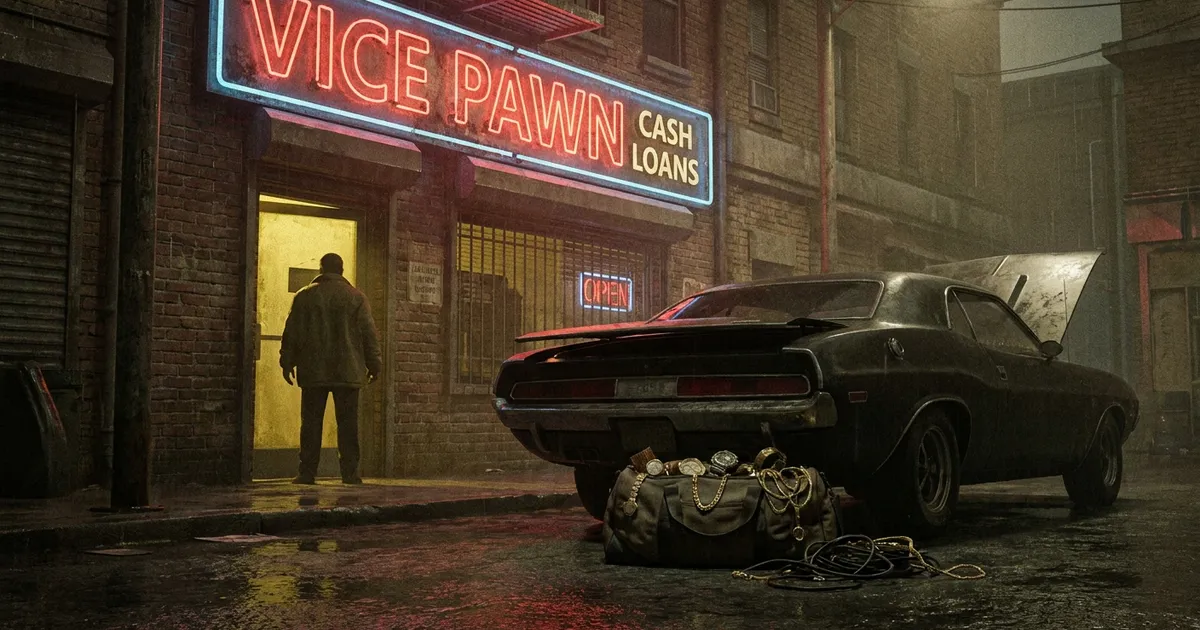
Rockstar has confirmed that GTA 6 will make you work for stolen money instead of just handing you a cash pickup. Steal something worth real value in Leonida and you cannot simply pocket it. You have to hide it, hold onto it while the heat cools off, then find a criminal buyer willing to take it off your hands for less than it’s worth. That buyer is called a Fence, and the whole loop, from stealing to storing to selling, is the GTA 6 fence system, one of the more grounded parts of how the game’s underworld economy actually works.
Here’s what this guide covers:
- What Rockstar has actually confirmed
- How the fence system works
- The four categories of stolen goods
- The Stash Box: where stolen goods live
- Weapon lockers and the carry limit connection
- Personal Garages as criminal home base
- Vehicles built for stashing stolen goods
- Gang compounds and the PTT Youngin$ raid
- How this compares to Red Dead Redemption 2
- What this means for making money at launch
- What’s still unknown
- FAQ
What Rockstar has actually confirmed
The core details here trace back to Rockstar’s own materials, not a leak. On June 25, 2026, Rockstar published new GTA 6 screenshots alongside pre-order details and a full breakdown of Standard and Ultimate Edition contents, and outlets including Kotaku and GameSpot combed through the copy line by line. Buried in the item and location descriptions, not in a flashy trailer moment, was the confirmation that Rockstar built an actual stolen-goods economy into GTA 6, not just a vague “steal stuff for cash” mechanic.
The confirmed line from Rockstar’s own copy: there will be at least one “local Fence” who will “accept most stolen goods at a reasonably discounted rate.” That single sentence is doing a lot of work. It tells you stolen goods have a market, that market pays less than full value, and the person running that market has a name and a role in the world rather than being an abstract menu screen.
This is worth separating clearly from rumor. Everything in this section comes from Rockstar’s own pre-order page and screenshot descriptions, the same source our pre-order and editions guide uses for pricing. It is not sourced from the 2022 leaked footage the way some of the deeper weapon list details are. When this article moves into speculation, like exactly how fence prices will scale or whether NPCs will react differently to different stolen goods, it says so.
How the fence system works
Based on Rockstar’s confirmed copy, the loop breaks down into three steps: steal, store, sell.
Steal it. The stolen-goods system reportedly covers a wide range of categories, not just cars. Reporting built around the confirmed copy describes vehicles, weapons, drugs, and valuables all feeding into the same system, which is a broader net than GTA games have used before. GTA 5 let you steal cars and sell them through Los Santos Customs’ export system, but that was vehicle-only. GTA 6 sounds like it folds multiple theft categories into one unified economy.
Store it. You cannot walk around Vice City forever holding a stolen car stereo or a bag of drugs without consequences. Rockstar’s copy makes a point of noting that carrying hot goods draws police attention, which is why the Stash Box exists (more on that below).
Sell it. The actual payout comes from the Fence, described as a person, not a menu, who buys stolen goods “at a reasonably discounted rate.” That phrasing matters. It confirms a below-market payout is intentional, not a bug, meaning stolen goods will always be worth less than legitimate income of equivalent value. That’s a real design choice that shapes how worthwhile grand theft actually is as a moneymaking strategy compared to jobs, heists, or other legal-ish hustles.
What isn’t confirmed yet: how many Fence characters exist across the map, whether prices vary by fence or by neighborhood, and whether certain items can only be sold to specific buyers. RDR2’s fence system had regional variation and reputation mechanics tied to it, and it’s a reasonable guess that GTA 6 could do something similar, but nothing in Rockstar’s current materials confirms that level of detail yet.
This also isn’t Rockstar’s first attempt at a sell-stolen-stuff loop, which is useful context for judging how deep it might go. GTA Online already runs several systems built around a similar shape: Vehicle Cargo has players steal and deliver cars to a warehouse buyer for a cut of their value, the Auto Shop lets you strip and resell repossessed vehicles piece by piece, and various heist setups involve fencing stolen goods to specific NPC contacts before a payout lands. None of those systems are confirmed to carry over directly into GTA 6’s single-player Fence mechanic, but they show Rockstar has years of live-service data on how players respond to discounted, risk-adjusted payouts for stolen property. It would be a surprise if none of that experience shaped how the new system was built.
The four categories of stolen goods
Rockstar’s confirmed copy and the reporting built around it single out four broad categories that reportedly feed into the Fence economy: vehicles, weapons, drugs, and valuables. Here’s what’s known or reasonably inferred about each one, with confirmed details kept separate from educated guesses.
Vehicles. The most visually obvious category, and the one with the clearest precedent from GTA 5’s Los Santos Customs export list. Stolen cars, and at least one confirmed boat, appear to route through the same fence-and-stash loop as everything else rather than getting their own separate system. The Shitzu Squalo’s onboard weapons crate, detailed below, suggests some vehicles do double duty as both loot and storage at once. For the full rundown of confirmed rides, see our complete GTA 6 car list.
Weapons. Directly tied to the new weapon locker system and the two-rifle, two-pistol carry limit covered in our full weapons breakdown. A stolen gun presumably needs the same hide-then-sell treatment as anything else, which raises an open question this page will update once answered: does selling a stolen weapon remove it permanently, or can you keep a stolen gun in your own locker instead of fencing it. Nothing confirmed either way yet.
Drugs. The category with the least detail attached so far, mentioned in reporting as part of the same stolen-goods net but without a named example the way vehicles and weapons have. Given Vice City’s setting and the series’ history with the drug trade going back to the original Vice City in 2002, it would be surprising if this stayed a minor footnote, but there’s no confirmed mission or system built specifically around it yet.
Valuables. The catch-all category, likely covering jewelry, cash-adjacent loot, and the kind of contraband Rockstar’s own copy references in the PTT Youngin$ raid description below. This is the category closest to what RDR2’s fence system handled, small, high-value items picked up opportunistically rather than stolen through a dedicated heist.
The Stash Box: where stolen goods live
The Stash Box is the confirmed storage solution for anything you steal but aren’t ready to sell. Per Rockstar’s own copy, a Stash Box is available at every Personal Garage and Safehouse, giving you a secure place to park stolen items instead of carrying them on your person or leaving them in the open.
The reasoning Rockstar gives is practical rather than just a gameplay abstraction: holding stolen goods reportedly draws more police attention the longer you carry them. That single detail turns storage into an actual decision instead of busywork. Do you risk driving across town with a hot car, or do you get it into a Stash Box fast and deal with selling it later? It’s the same tension RDR2 built around carrying pelts and stolen wagons through bounty hunter territory, just translated into a modern city with an active police presence instead of open frontier.
One specific location got called out by name in Rockstar’s copy: Paradise Garage, tied to the ’67 Vapid Dominator Buggy included in the Ultimate Edition, is described as having “a secure place to deposit stolen goods to be fenced.” That’s a direct confirmation that specific garages are built around this system rather than it being a generic menu you access from anywhere.
Weapon lockers and the carry limit connection
Weapon lockers are Rockstar’s confirmed storage slot for guns you own but aren’t currently carrying, tied to every Personal Garage. The feature connects directly to the carry limit overhaul covered in our full weapons list: GTA 6 is reportedly moving away from GTA 5’s system of carrying every weapon you’ve ever owned at once, capping you instead at two rifles and two pistols on-body, Red Dead Redemption 2 style.
A weapon locker at your Personal Garage is where the rest of your arsenal presumably lives when it’s not strapped to your back. That pairs naturally with the Stash Box: one storage system for guns you’re not currently carrying, another for stolen items you haven’t fenced yet, both housed in the same physical location. It reads as Rockstar building your garage into a genuine criminal home base rather than just a parking spot with a paint shop attached, the same idea that shows up again below with Jason’s Safehouse.
Personal Garages as criminal home base
Multiple outlets covering the June 2026 reveal describe Jason’s Safehouse specifically as a hub that handles vehicle storage, weapon management, and stolen goods storage all in one place. That framing lines up with everything above: Rockstar isn’t scattering these systems across unrelated menus, it’s consolidating them into physical locations you return to between jobs.
That’s a meaningful structural choice for how GTA 6 wants you to play. GTA 5’s safehouses were mostly cosmetic, a place to change clothes and save the game. If Personal Garages in GTA 6 genuinely function as the hub for storing weapons, stashing stolen goods, and managing vehicles, they become a real strategic base rather than a formality, and choosing which garage to prioritize early on becomes part of actually planning your criminal operation.
Vehicles built for stashing stolen goods
The stolen-goods system isn’t confined to buildings. At least one confirmed vehicle doubles as mobile storage. The Shitzu Squalo, a boat included in the GTA 6 Ultimate Edition, comes docked at Washington Beach with a weapons crate on board, according to Rockstar’s own Ultimate Edition breakdown covered in our pre-order guide. Broader reporting on the fence system also describes some vehicles letting you stash stolen merchandise inside them to sell later, rather than requiring an immediate trip back to a garage.
That detail matters for how a heist or robbery might actually play out in practice. If you can stuff loot into a vehicle and drive off instead of needing to reach a Stash Box immediately, it opens up more flexible getaway routes and changes what “getting away clean” looks like compared to games where stolen items exist only as an abstract number added to your cash total the second you grab them.
Gang compounds and the PTT Youngin$ raid
Gang compounds are the activity-side counterpart to the Fence economy: locations you raid specifically to generate stolen goods worth fencing. Reporting describes them as open-world locations tied to rival gangs where players can fight their way in and walk out with cash, weapons, and contraband, feeding straight back into the Stash Box and Fence loop described above.
Rockstar has named one specific example directly: the PTT Youngin$ Illegal Goods Store, a raid on what the company’s own copy calls “one of Southside Vice City’s loudest and most socially active gangs,” where a successful raid lets you “escape safely to score some special items and distinct contraband.” This particular raid is confirmed as exclusive to the Ultimate Edition, one of the two story missions locked behind the $99.99 tier alongside the Classic Car Collection commission.
It’s worth being precise here, because it’s an easy detail to get wrong: the fencing loop itself, the Fence, the Stash Box, and weapon lockers, is a standard feature of the base $79.99 game. Only this one named gang compound raid, PTT Youngin$, is confirmed as Ultimate-exclusive. Whether Standard Edition players get their own version of gang compound raids as a repeatable open-world activity type hasn’t been confirmed either way yet, though the framing of “gang compound” as a general activity category rather than a one-off mission name suggests more than just the single Ultimate Edition example exists.
How this compares to Red Dead Redemption 2
Rockstar built a fence system into Red Dead Redemption 2 already, so it’s a reasonable comparison point rather than a totally new idea. RDR2’s fences bought stolen wagons, jewelry, and other valuables at a markdown, with your reputation and legal status shifting depending on how openly you sold hot goods in a given town.
What’s different in the reporting around GTA 6 is scope. RDR2’s fencing revolved mostly around wagons and specific valuable items you’d stumble across. GTA 6’s version, based on Rockstar’s confirmed copy, explicitly folds in vehicles, weapons, drugs, and valuables under one system, a wider net that fits a modern city setting where theft opportunities are constant rather than occasional. It’s less a frontier trading post and more an actual black market economy running underneath Leonida’s legitimate one.
What this means for making money at launch
If the confirmed details hold up, fencing stolen goods looks like one of the more accessible early-game cash strategies, alongside gang compound raids for players with Ultimate Edition access. The practical loop shakes out to: steal something valuable, get it into a Stash Box or a vehicle with built-in storage before police attention piles up, then find a Fence and accept a discounted payout.
That’s a slower, more deliberate version of making money than just grabbing a car and driving it into a mod shop the way GTA Online veterans are used to. It rewards planning where your garage is, how far you have to drive with hot goods, and whether a particular heist target is even worth the discounted fence price after factoring in the risk. Combined with the confirmed weapon carry limit, it points toward a GTA 6 economy that wants you managing resources actively rather than hoarding everything with no consequences, much closer to how RDR2 handled its own economy than how GTA 5 did.
Putting the confirmed pieces together, an early-game theft run probably looks something like this. You spot a target worth stealing, whether that’s a parked car, a gang compound’s contraband stash, or a drug shipment. You grab it and immediately start thinking about heat rather than treating it as free money, since Rockstar’s own copy ties carrying stolen goods directly to increased police attention. You either drive straight to the nearest Personal Garage or Safehouse to drop it in a Stash Box, or, if the item is small enough, tuck it into a vehicle with built-in storage like the Squalo’s weapons crate. Only once it’s secured do you go looking for a Fence, accept a below-market payout, and start the loop again. Every step in that chain is a place the run can go wrong, which is exactly the kind of friction a currency-grinding menu system doesn’t have.
What’s still unknown
None of the following has been confirmed by Rockstar, and it’s worth being upfront about the gap between what’s locked in and what’s a fair guess. Exact fence payout percentages are unknown, we only know it’s “reasonably discounted.” How many Fence NPCs exist across Leonida, and whether they’re all in Vice City proper or spread through the wider map, hasn’t been detailed. Whether stolen goods carry a heat or reputation mechanic the way RDR2’s did, where selling too openly draws consequences beyond immediate police attention, also hasn’t been addressed in anything Rockstar has published so far. And whether Standard Edition players get their own repeatable gang compound raids beyond the one confirmed Ultimate-exclusive mission remains an open question. This page will be updated if Rockstar or a verified gameplay preview answers any of these before November 19.
FAQ
What is the fence system in GTA 6?
It is a confirmed gameplay loop where you steal items such as vehicles, weapons, drugs, or valuables, store them somewhere safe, then sell them to an illegal buyer called a Fence for cash at a discounted rate rather than full value.
Where do you store stolen goods in GTA 6?
In a Stash Box, confirmed for every Personal Garage and Safehouse. Some vehicles, including the Ultimate Edition Shitzu Squalo boat, also come with their own secure storage for stolen items.
Is the fence system exclusive to the GTA 6 Ultimate Edition?
No. The core fencing loop, Fence, Stash Box, and weapon locker, is a standard feature confirmed for the base game. Only one specific mission, the PTT Youngin$ gang compound raid, is locked to the Ultimate Edition.
What are gang compounds in GTA 6?
Open-world locations tied to rival gangs that players can raid for cash, weapons, and contraband. Rockstar has confirmed at least one named example, the PTT Youngin$ Illegal Goods Store raid, as an Ultimate Edition exclusive activity.
Does GTA 6 copy Red Dead Redemption 2 fencing?
The structure is similar, steal, hide, sell, but reporting describes GTA 6 covering a wider range of goods than RDR2, including vehicles, weapons, drugs, and valuables, built around a modern urban crime setting instead of a frontier one.
This page is built from Rockstar’s own June 25, 2026 pre-order copy and screenshot descriptions, not leaked or unverified material. SixHype is an independent fan site and is not affiliated with Rockstar Games or Take-Two Interactive.